
India's industrial production growth decelerated to 6.7 per cent in September, down from 7.8 per cent in August, primarily due to a contraction in mining activity and a slowdown in manufacturing, according to government data. Experts attribute the moderation to a high-base effect, anticipation of festive sales, and concerns over rising inflation.

India's unemployment rate for individuals aged 15 years and above saw a marginal improvement, dipping to 5.1 per cent in the July-September 2026 quarter from 5.4 per cent in the previous quarter, according to the Periodic Labour Force Survey (PLFS). The decline was primarily driven by a fall in rural unemployment, while urban joblessness remained largely stable.

India has strongly asserted that human rights should not be weaponised for political pressure or selective targeting of nations, pushing back against attempts to negatively characterise the world's largest democracy based on unverified allegations and incomplete statistics.
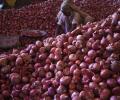
India's retail inflation surged to 5.54 per cent in September, primarily due to a significant increase in onion and other food prices, remaining just within the Reserve Bank of India's tolerance band. This marks the highest inflation since the new series with base year 2024 took effect in January.

India needs to move beyond ease and cost of doing business and focus on the "speed of doing business" as the next leg of reforms to sustain economic growth and private investment, Confederation of Indian Industry (CII) President R Mukundan said.

'What is the need for collecting so much data unless they are going to be used for some other purpose?'

India's industrial production increased by 6.7 per cent in July 2026, primarily driven by a 7.3 per cent growth in the manufacturing sector and a strong 8.7 per cent rise in electricity and gas supply, despite a contraction in the mining sector.
India's industrial production recorded a significant 7.3 per cent year-on-year growth in June, primarily fuelled by a strong performance in the manufacturing sector and robust expansion in electricity and gas supply.

Ashok Thombre, international business advisor at The Quantico, shortlists some of the most popular government competitive exams in India that attract thousands of aspirants every year.

'I don't really expect the August increase in food prices, which was close to 6 per cent, to persist as we go close to the end of this year.'
India's unemployment rate reached an 11-month high of 5.5 per cent in May, up from 5.2 per cent in April, according to the National Statistics Office, indicating a softening labour market as labour-force participation also eased.

India's economy in FY26 saw significant momentum from investment demand, with gross fixed capital formation (GFCF) accelerating to 8.2 per cent, while private final consumption expenditure (PFCE) also grew steadily, according to provisional estimates.

India's retail inflation, measured by the Consumer Price Index (CPI), rose to 4.45 per cent in July, up from 4.38 per cent in June, primarily due to higher food prices, particularly onions and ginger. This marks the second consecutive month the inflation rate has remained above the Reserve Bank's median target.

The objective should be clear: Energy security without abandoning environmental responsibility; water security without ignoring local concerns; and strategic resilience without sacrificing public confidence, notes Varun Arya.

The scenes are same; placards, viral videos, riot, police but the grievances could hardly be more different, notes Abhay Jere, ex-Vice Chairman, AICTE.

'Having analysed the break up of the hospital billing structure the committee believes that rationalising of room charges needs to be done on an emergent basis.'

With the two members quitting, the NSC now has only two members -- Chief Statistician Pravin Srivastava and NITI Aayog CEO Amitabh Kant.

India's overall unemployment rate for individuals aged 15 and above decreased to 5.1 per cent in July 2026, down from 5.5 per cent in June 2026, according to the latest Periodic Labour Force Survey (PLFS) by the National Statistics Office (NSO).

In cities where women own a larger share of small businesses, women also account for a larger share of jobs.
India's industrial production growth decelerated to a five-month low of 4.1 per cent in March, primarily due to the subdued performance of the manufacturing and power sectors, exacerbated by the West Asia crisis.

The All India Football Federation has disclosed the number of registered football players, coaches, and referees in India in response to an RTI application.

The new Index of Industrial Production (IIP) series, which shifts the base year from 2011-12 to 2022-23 and is scheduled for release on June 1, will, for the first time, track rare earths and minor minerals, piped natural gas (PNG), and water supply, sewerage and waste management.

The US Department of Homeland Security (DHS) has proposed a new rule to eliminate the 60-day grace period for H-1B visa holders and other nonimmigrants after job loss, a move expected to significantly impact Indian technology workers.
India's retail inflation rose to 4.38 per cent in June, driven primarily by costlier food items, pushing it above the Reserve Bank of India's median target of 4 per cent for the first time under the new series.

India's retail inflation, measured by the Consumer Price Index (CPI), increased to 3.48 per cent in April, up from 3.40 per cent in March, primarily due to a surge in prices of gold and silver jewellery, as well as certain kitchen staples like tomatoes and cauliflower.

Retail inflation slipped to a multi-year low of 0.25 per cent in October, driven by the impact of the GST rate cut and subdued prices of vegetables and fruits, government data showed on Wednesday.

Private hospitals accounted for 30.8 per cent of current health expenditure in FY23, while pharmaceuticals and medical goods contributed more than 21 per cent, underlining continued dependence on private healthcare and medicine spending.

India's unincorporated non-agricultural sector, excluding construction and corporate enterprises, added approximately 7.5 million workers in a single year, reaching 128.1 million employed in 2025, according to the NSO's ASUSE 2025 report.

India's industrial production grew at a two-year high of 6.7 per cent in November this year, driven by strong performances in mining and manufacturing, according to official data released on Monday.

According to the latest NCRB data, five Delhi Police personnel were killed on duty in 2024. The data reveals the causes of these fatalities, including criminal activity and accidents.

India's retail inflation marginally increased to 3.4 per cent in March, up from 3.21 per cent in February, primarily due to an uptick in certain food items and the initial impact of the West Asia crisis on fuel prices, according to government data.

India's industrial production saw a 5.2 per cent increase in February, primarily fuelled by a significant improvement in the manufacturing sector, with 14 out of 23 industry groups recording positive growth.
India's unemployment rate for individuals aged 15 and older increased to 5.1 per cent in March 2026, up from 4.9 per cent in February, primarily due to a rise in joblessness in urban areas, according to government data.
Retail inflation inched up to 0.71 per cent in November on rising prices of vegetables, protein-rich items, and fuel, government data showed on Friday. The consumer price index (CPI)-based retail inflation had fallen to a record low of 0.25 per cent in October, mainly due to lower prices helped by GST rate cuts and a favourable base.

'It is not because of the war in West Asia, which began on February 28.' 'Petroleum product prices are already going through the roof. They are bound to have a serious inflationary impact.' 'A country's leadership is tested in trying times. It is here that the current leadership is failing.'
Retail inflation stood at 2.75 per cent in January under the new series of All India Consumer Price Index (CPI), with 2024 as the base year, released on Thursday.

India's economy registered a robust 7.7 per cent growth in the fiscal year 2025-26, an increase from 7.1 per cent in the previous year, with the January-March quarter alone seeing a 7.8 per cent expansion.
Retail inflation slipped to an eight-year low of 1.55 per cent in July mainly due to subdued prices of food items, including vegetables and cereals, according to government data released on Tuesday.

The Indian rupee plummeted to an all-time low of 95.80 against the US dollar, settling at 95.66, driven by elevated crude oil prices and escalating geopolitical tensions in West Asia, despite potential RBI intervention and import curbs on gold.
India's labour market in the second quarter (July-September/Q2) of 2025-26 (FY26) showed resilience, with the jobless rate easing even as more people entered the workforce. However, a rise in youth unemployment and a fall in the share of salaried workers remain areas of concern.
